Making Room for an Offline Hobby
An offline hobby can begin with materials you already have, a modest time slot, and the freedom to be a beginner.
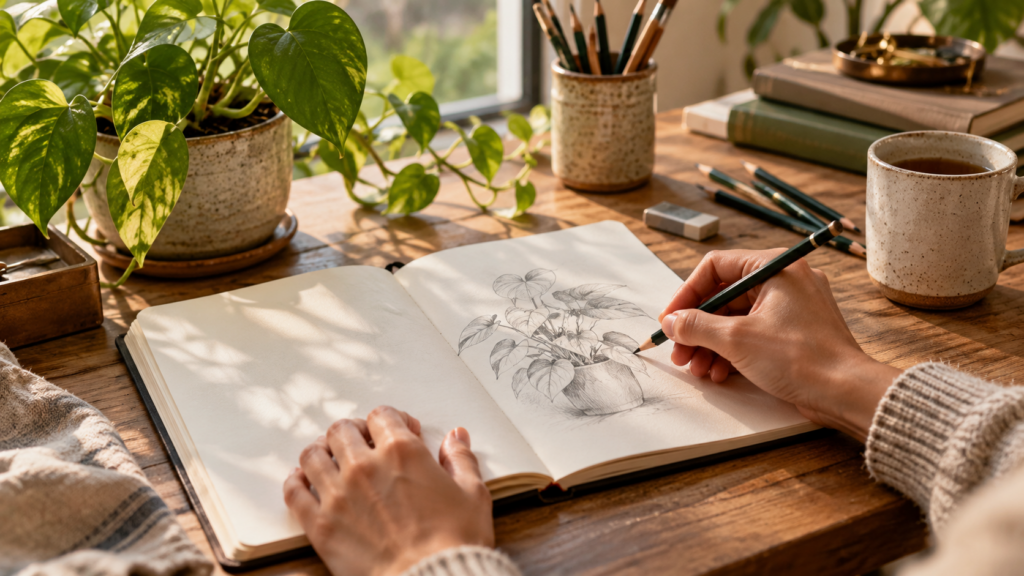
An offline hobby does not need to become a side business, a public project, or a new identity. It can simply be something enjoyable to return to: drawing in a notebook, tending a few plants, building a model, or learning a piece of music. The challenge is often making room for it in a day already full of obligations.
Starting small helps separate curiosity from commitment. Instead of buying a complete set of equipment, try one activity with basic materials. The first question is whether you enjoy the process. You can decide what to purchase and how far to take it after spending some time actually doing it.
Lower the effort required to begin
Choose a place where the hobby can be ready without taking over the home. A small box for drawing supplies or a shelf for unfinished work can make the difference between starting and postponing. If every session begins with searching and clearing space, the setup becomes a barrier in its own right.
A short, repeatable time slot is often easier to protect than a large block that never arrives. Twenty minutes after dinner or part of a weekend morning gives the activity somewhere to live. Treat this as an experiment rather than another strict appointment you must keep regardless of circumstances.
It can help to choose a task with a visible stopping point. Sketch one object, practise one passage, or finish one part of a model. You do not need to complete the whole project. Leaving a note about the next step makes returning easier and prevents a long gap from feeling like a complete restart.
Let the activity remain a hobby
Being a beginner means making uneven work. A crooked line or an unsuccessful attempt does not need an explanation. Private practice gives you permission to notice, adjust, and try again without turning each session into something that must be displayed or judged.
Sharing can still be enjoyable. A local group, a friend with a similar interest, or a class can provide company and practical guidance. Decide how much involvement suits you. Some people want regular conversation; others value the quiet of working alone. Neither approach makes the hobby more legitimate.
Review the activity after several sessions. Are you drawn to the making itself, or mainly to the idea of having made something? That distinction can help you change direction without treating the experiment as a failure. You may prefer a different material, a smaller project, or an entirely different pastime.
The value of an offline hobby can be very ordinary: a finished page, an interesting problem, or a pleasant hour. Leaving it at that is a reasonable choice. It does not need to earn money or produce a measurable improvement to deserve a place in your week.